Fun early theory
Games, singing, movement, listening, symbols, and pattern discovery make musical language tangible for young learners.

The language behind the music
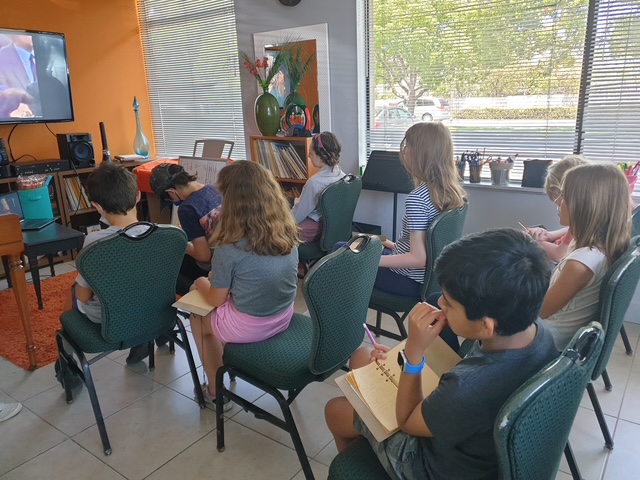
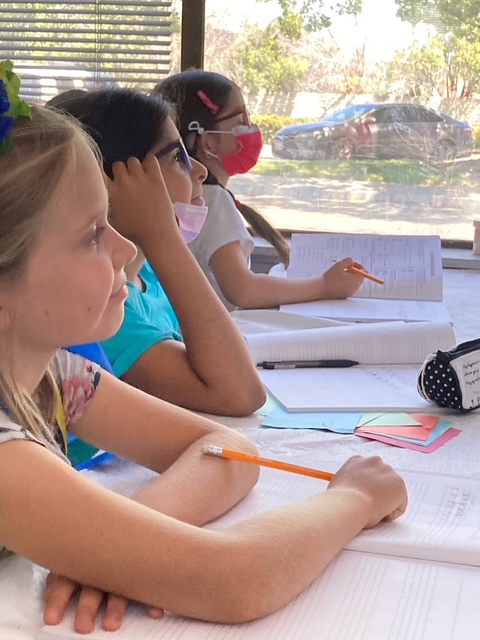
Theory, solfège, ear training, music history, and literature help students understand what they play—not only reproduce it. OMS offers different groups for different ages and levels.
Fun beginnings through Certificate of Merit Advanced level
A path with room to grow
A well-rounded musician can read, hear, analyze, remember, and communicate musical ideas. Theory and solfège connect private lessons to that larger understanding, giving students tools they can carry into every instrument, ensemble, audition, and new piece.
Our program ranges from playful early-music classes to structured Certificate of Merit preparation from Level 1 through Advanced. Music history and literature give students context: who created this music, what world it came from, and why its style sounds the way it does.
The musical journey
Games, singing, movement, listening, symbols, and pattern discovery make musical language tangible for young learners.
Students learn alongside peers at an appropriate pace, from fundamentals through advanced harmony and analysis.
Structured support covers written concepts, ear training, sight-singing, history, and literature from Level 1 through Advanced.
Music and the developing brain
Instrumental and vocal study combine listening, movement, attention, memory, reading, timing, and emotional expression. Research on music training suggests that sustained practice can be associated with measurable changes in auditory, motor, and cognitive development. We present these findings carefully: music is valuable in itself, and every student develops differently.
Why Orange Music Studio
Different ages and levels receive appropriately paced material—not one class expected to fit everyone.
Concepts become useful immediately when students recognize them in repertoire and performance.
Playful discovery and high-level CM preparation belong within the same complete musical education.
Tell us the student’s age and level, and we will recommend the right theory or solfège group.
Let us look beyond the online schedule
Not every possible opening appears online because the schedule is optimized around current teaching blocks. Tell us what your family needs, and we would love to look for a match personally.
Research findings describe associations and measured changes in particular studies; individual outcomes vary. OMS uses this research as context, not as a medical promise.